Your Phone Call Just Moved From a Tower to Space
In a test in the US, an ordinary smartphone switched from a cell tower to a satellite mid-call in milliseconds. Here is how it works and why it matters.
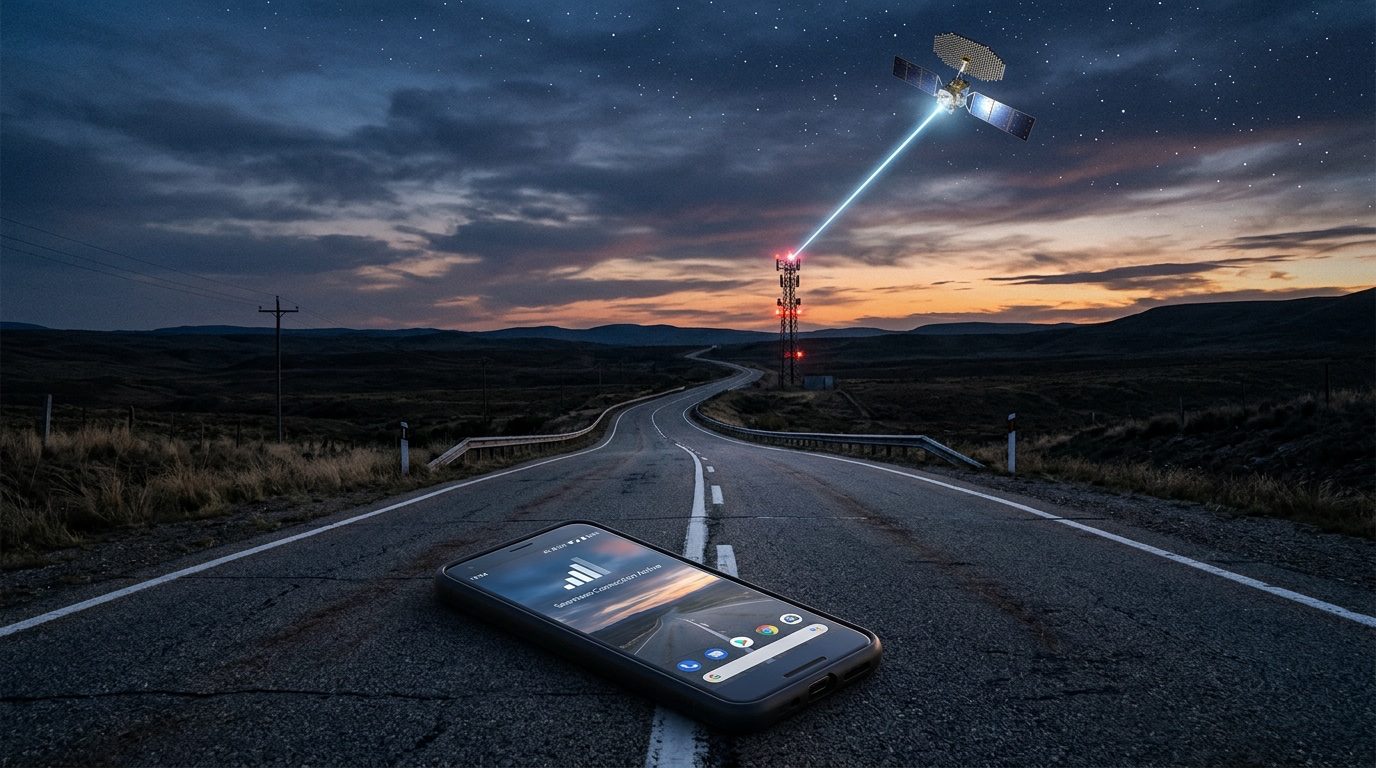
Drive far enough from a city and your phone bars start to fade. Out on remote highways, in the mountains or at sea, there is simply no tower close enough to reach. Satellites can cover those places — but until now, a phone had to choose: either the tower or the sky, and switching between them meant a dropped call or a frozen download.
On 21 October, near Granite Falls in Washington State, USA, that wall came down. The American operator AT&T and the space company AST SpaceMobile ran what they call the world's first seamless handover between a ground cell tower and a satellite. An ordinary smartphone was in the middle of a phone call and a data session when it moved from the tower to a satellite in low orbit — and neither the call nor the connection broke.
Milliseconds instead of seconds
Handing a call from one tower to the next is something your phone does all the time as you move. Doing the same between a tower on the ground and a satellite racing overhead is much harder. Earlier attempts took several seconds — long enough for a call to drop. In this test the switch took milliseconds, too fast for a person on the line to notice.
Who built it
• AST SpaceMobile — the BlueBird satellites. Each one carries a huge antenna array that speaks the same 4G and 5G signal as a normal cell tower.
• Ericsson — the network equipment and the automation that decides when to switch.
• Nokia — the radio units and special software for the satellites.
• AT&T — the network and the test itself.
The key point: no special satellite phone is needed. The idea is that the same smartphone in your pocket, with the same SIM card, switches on its own — no buttons, no extra settings.
What changes — and what does not
Satellites are not meant to replace towers in cities: on the ground, towers are still faster and cheaper. Instead they fill the gaps — empty roads, remote villages, the sea, and places where storms or floods have knocked the towers out. No date has been named yet for when ordinary customers will get the service, but the hardest part, staying connected while switching, has now worked in a real test.
Source: https://interestingengineering.com/innovation/satellite-cellular-network-handoff-smartphones