Why You Can't Tickle Yourself, and What It Says About You
· by Mike
One small brain trick decides what counts as "me". It explains phantom limbs and rubber hands, and who would feel the pinch if you were copied atom by atom.
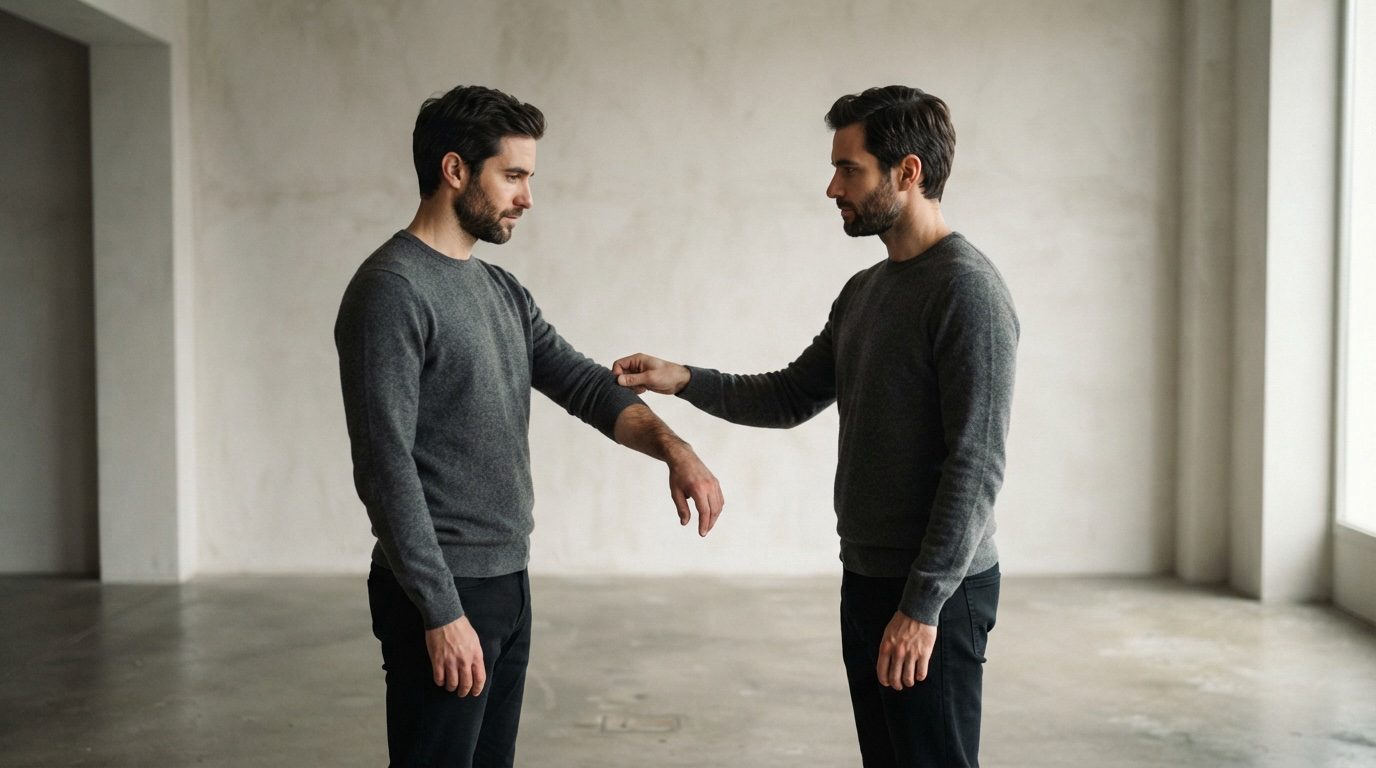
Try to tickle yourself right now. Nothing, right? That small failure holds the best answer I know to a question that has bugged me for years: what exactly is "me"?
Here is where I landed. To me, consciousness is a quiet process running underneath everything, constantly sorting the world into "me" and "not me". You never notice it working. But science has found a few places where you can catch it in the act, and the humble tickle is the easiest one to try at home.
Your Brain Cancels Your Own Touch Before It Lands
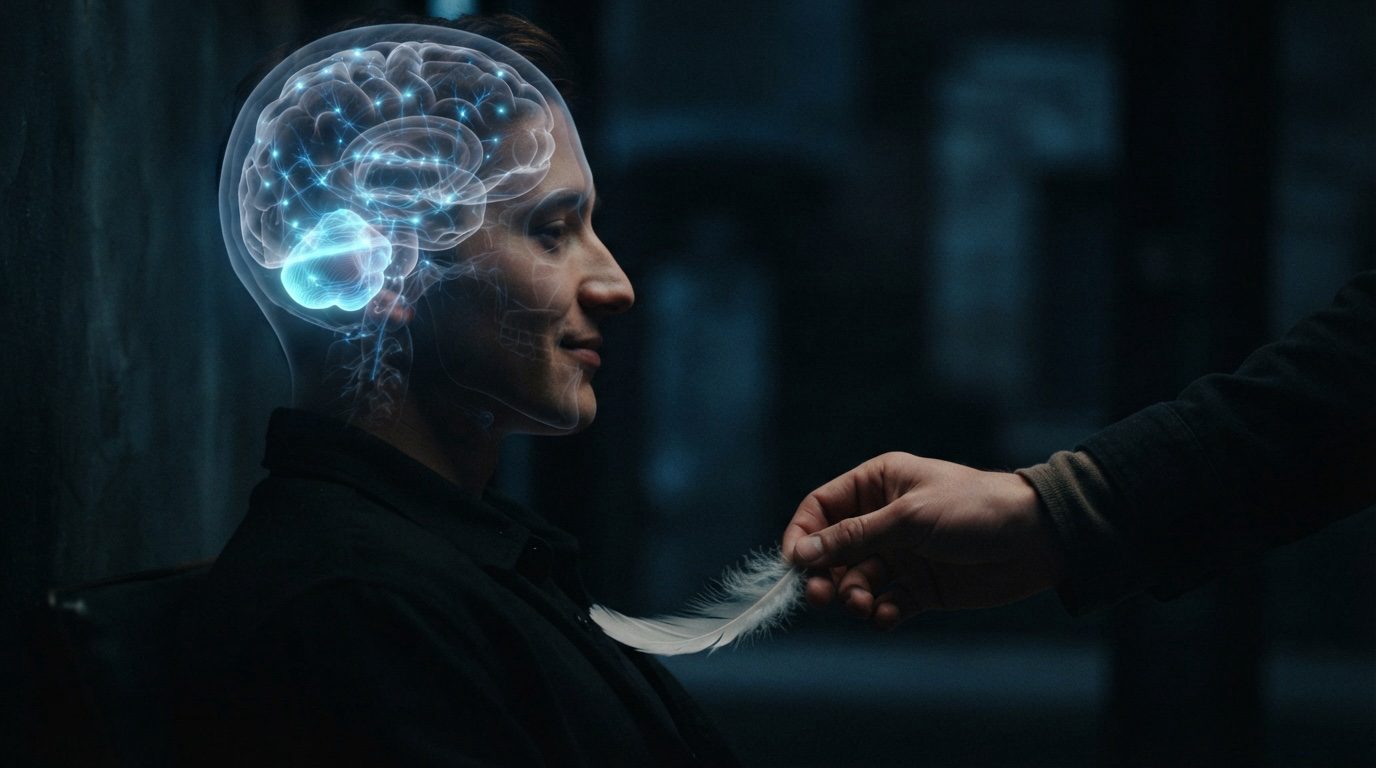
When you move your hand toward your ribs, your brain already knows what is about to happen. Researchers at University College London showed that the cerebellum, at the back of the brain, predicts the sensation of a self-made touch and uses that prediction to turn the feeling down. Two brain regions that process touch were less active when people tickled themselves than when someone else did it. Their review is here https://pubmed.ncbi.nlm.nih.gov/10943682/
The fun part came with robots. Volunteers moved a lever that made a robot tickle their palm. With no delay, nothing. But when the robot lagged by a fraction of a second, the touch felt ticklish again. The prediction no longer matched, so the brain filed the touch under "not me".
That is my comparison process, caught in a lab. The brain does not ask "whose hand is this?" It asks "did I see this coming?"
A Rubber Hand Can Become Yours in Seconds
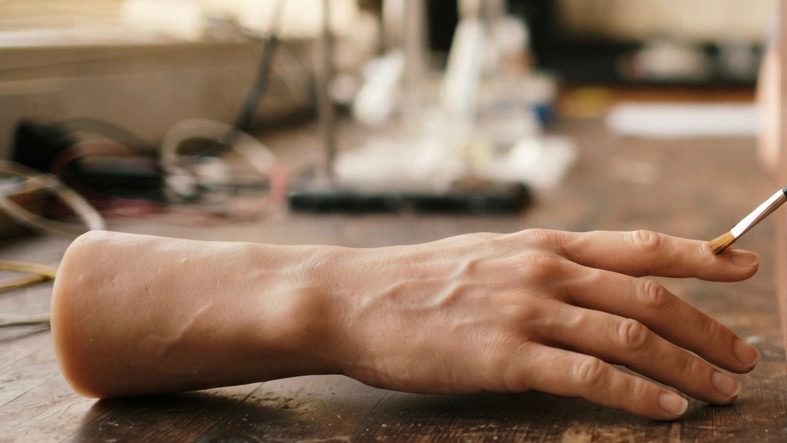
If "me" is just a prediction, it should be possible to fool it. It is, and embarrassingly easily.
In the rubber hand illusion, first described in 1998, your real hand is hidden behind a screen while a fake one lies in front of you. Someone strokes both with brushes at the same moment. In as little as 10 to 20 seconds, many people start to feel the touches in the rubber hand and sense that it belongs to them.
In 2008 Valeria Petkova and Henrik Ehrsson at Karolinska Institutet in Sweden went further. Wearing goggles that showed the view from a camera on another person's head, volunteers felt that the other body was their own. The illusion held even when they turned and shook hands with their own biological body. You can read the study yourself https://journals.plos.org/plosone/article?id=10.1371/journal.pone.0003832 and it is short and wonderfully strange.
So the sense of owning a body is not stamped onto the flesh. The brain assigns it, moment by moment, to whatever matches its predictions.
Lose a Hand, and the Brain Keeps the Map
This also settles the first part of my old puzzle. If you lose a hand, are you the same person? Of course. And the brain agrees in a surprising way.
In one study of people after leg amputation, every single one still felt the missing limb in some way six months later. A review of thirteen studies put phantom limb pain at about half of amputees. The hand is gone, but the brain's model of the hand keeps running.
What about losing both arms and legs, or keeping only a head alive with machines? Nobody has done the second to a human, so from here on this is my reasoning, not a fact. If "me" lives in that predicting, comparing model, then the person stays as long as the model keeps running. A body is something the self uses, not the self.
Copying a Brain: Where Science Actually Stands
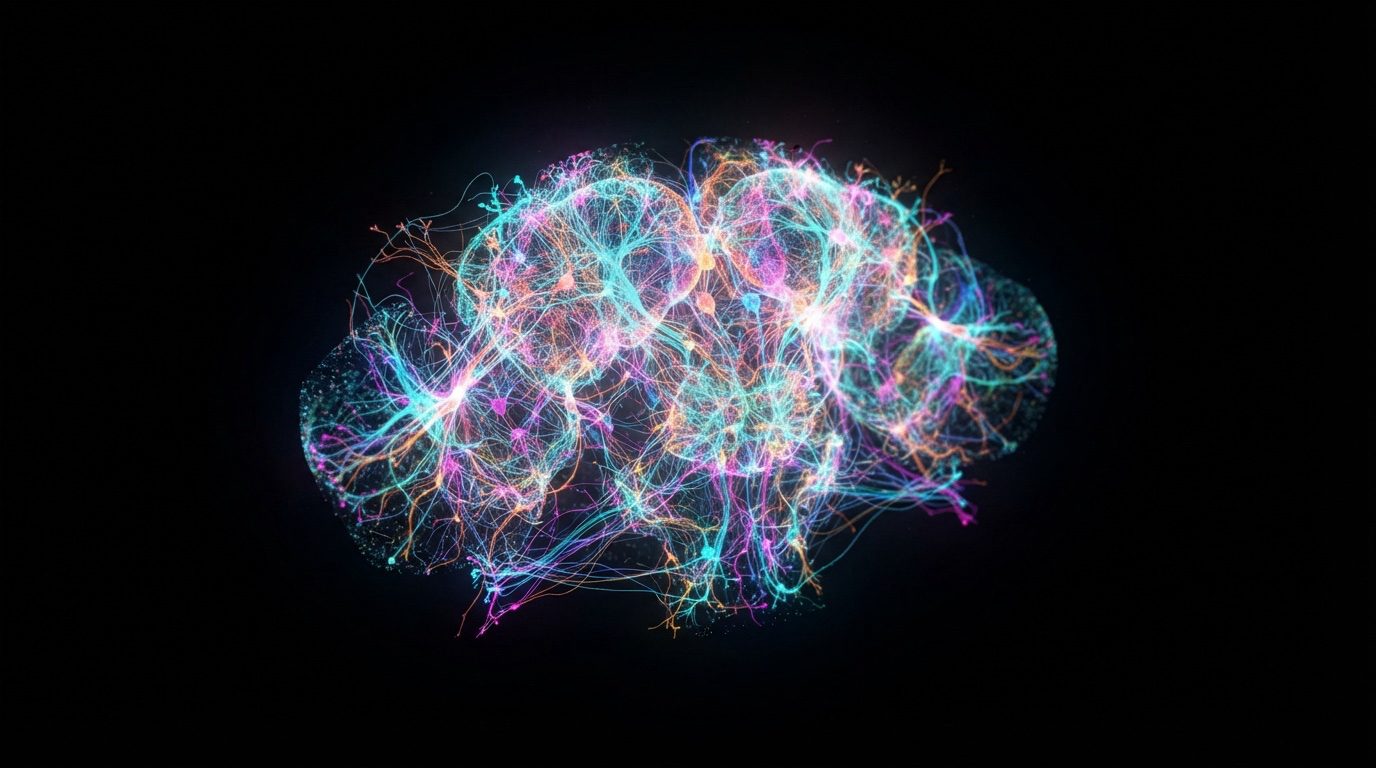
Now the harder half. Could we make an exact copy of a person, down to the molecules?
We can't, and we are not close. But the first maps are real. In 2024 the FlyWire consortium published the complete wiring diagram of an adult fruit fly brain: 139,255 neurons and 54.5 million connections between them. Anyone can explore it at https://codex.flywire.ai
In April 2025 the MICrONS project mapped a single cubic millimetre of mouse brain, about the size of a grain of sand. It held more than 200,000 cells and around 523 million synapses https://www.microns-explorer.org/cortical-mm3
Your brain has about 86 billion neurons. And a wiring map is only a snapshot of structure, not a working copy. Still, the question is no longer pure fantasy, so it is worth thinking through.
So, Who Would Feel the Pinch?
Imagine it works anyway. A perfect copy of you opens its eyes in the next room. Someone pinches it. Who feels the pain?
My answer: the copy, and only the copy. From its very first second, its brain starts its own comparison: this hand is "me", that wall is "not me". It predicts its own movements, just as yours does. The pinch lands on its body, matches nothing it planned, and its brain reports "someone touched me".
Your brain gets no signal at all. You might wince out of empathy, but there is no shared nerve and no shared prediction. Two identical machines, two separate "me"s, and they drift apart the moment their experiences differ.
I find that oddly comforting. Whatever you are, it is not a pattern that can sit in two places at once. It is a process happening right here, in one head, endlessly asking that tiny question: did I see this coming?