Three Cosmos Stories: One Light-Day, the Moon and a Pale Blue Dot
· by Mike
A probe that is one light-day from home, four people who went around the Moon and came back, and one photo that changed how I see the world.
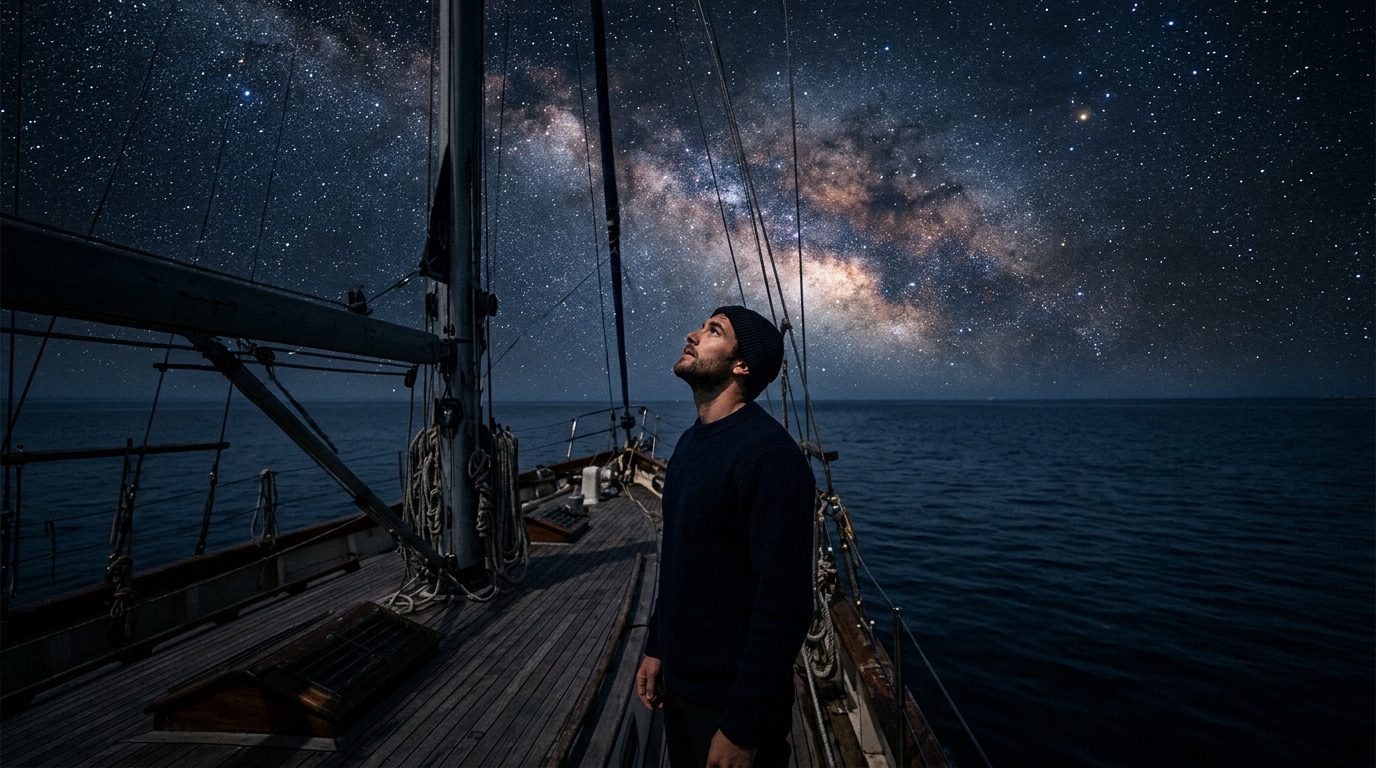
I have spent many nights far from land, where the sky is so dark you can see the Milky Way like a road. On nights like that people start telling stories. Mine are almost always about space. Not science fiction, real things that happened, and some that are happening right now. Here are three of them.
Story one: a probe that is one day away from home
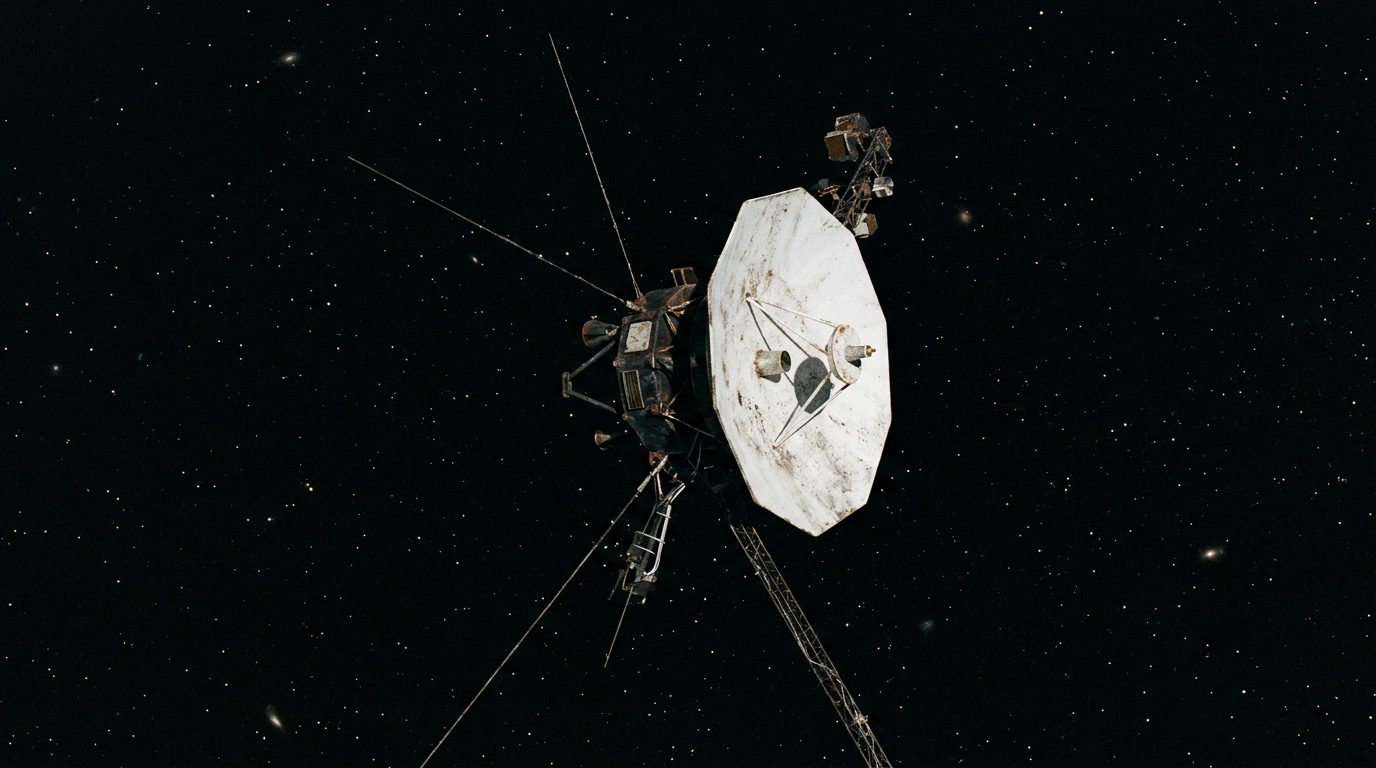
Voyager 1 left Earth on September 5, 1977. It was built for a few years of work. It is still flying and still talking to us.
On November 18, 2026, at 10:16 UTC, it will cross a line no human-made thing has crossed before: one light-day from Earth. That is about 25.9 billion kilometers.
On board there is a golden record. It carries sounds of Earth, music and greetings in 55 languages, in case anyone out there ever finds it. Nobody knows if anyone will. I like that someone still decided it was worth sending.
Most of its instruments are already switched off to save the little power it has left. NASA turns them off one by one, so the old traveler can keep its voice a bit longer. NASA's page about where the Voyagers are now https://science.nasa.gov/mission/voyager/where-are-voyager-1-and-voyager-2-now/ and the page of Voyager 1 itself https://science.nasa.gov/mission/voyager/voyager-1/
What one light-day really means
A radio signal, moving at the speed of light, needs a whole day to get there, and another day to come back. You send "hello" today and get the answer the day after tomorrow.
For comparison: light from the Moon reaches us in a little more than one second. Light from the Sun takes about eight minutes. Voyager's signal now takes twenty-four hours. That is how far "far" really is.
I think about this a lot. On a ship you learn that distance is time: so many hours to the next port, so many days across the ocean. Voyager has turned that into one simple picture. Our farthest messenger is now exactly one day of light away. And it is still sending news.
Story two: four people went around the Moon and came back

In April 2026, for the first time in more than fifty years, people flew to the Moon again. Artemis II carried four astronauts: Reid Wiseman, Victor Glover, Christina Koch and Jeremy Hansen. They did not land. They flew around the Moon, behind its far side, the side we never see from Earth, and then headed home.
Glover, Koch and Hansen also made history in a quieter way. Glover became the first person of color to travel to the Moon, Koch the first woman, and Hansen the first person from outside the United States.
Glover later said that after they came out from behind the Moon he took a moment to say a short prayer of gratitude. I understand him. When you are that far away, the only thing you really want is to come back.
The way home
And they did. On April 10, 2026, after ten days in space, the capsule hit the atmosphere at about 39,600 kilometers per hour. For about six minutes there was no radio contact at all, while the capsule was wrapped in burning plasma. Then three big parachutes opened, and the crew splashed down in the Pacific off San Diego. Mission control exploded with cheers.
The next goal, NASA says, is to land on the Moon again. The mission page https://www.nasa.gov/mission/artemis-ii/
Story three: the photo of everything we have
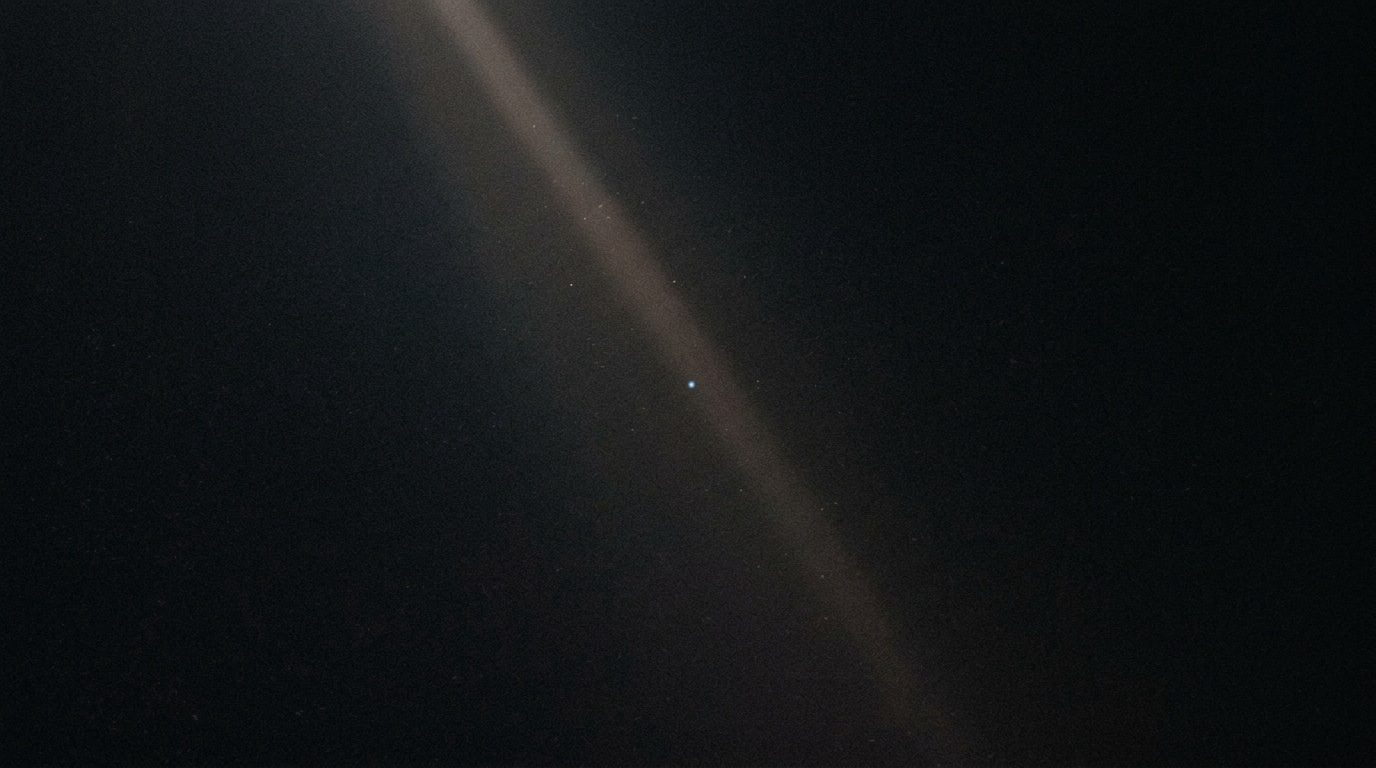
This one goes back to the first story. On February 14, 1990, before switching off its cameras for good, Voyager 1 turned around and took a picture of home from about six billion kilometers away. The idea came from the astronomer Carl Sagan.
On that photo Earth is smaller than one pixel. A pale blue dot inside a stripe of sunlight. Everyone who ever lived, every war, every love story, every port I have ever left and returned to, all of it fits into that dot. You can see the picture on NASA's site https://science.nasa.gov/photojournal/solar-system-portrait-earth-as-pale-blue-dot
Sagan later wrote that this photo shows how small we are, and how much we need to take care of each other and of the only home we have. I agree with every word.
Why I keep telling these stories
Because they are true, and because they are about us more than about space. A machine from 1977 still doing its job. Four people who went around the Moon and came home. One blurry photo that made a whole planet look small and precious.
Next time you are somewhere dark, look up. Somewhere out there, one light-day away, Voyager is still talking. We just have to wait a day to hear it.