AI Is Bringing Nuclear Power Back
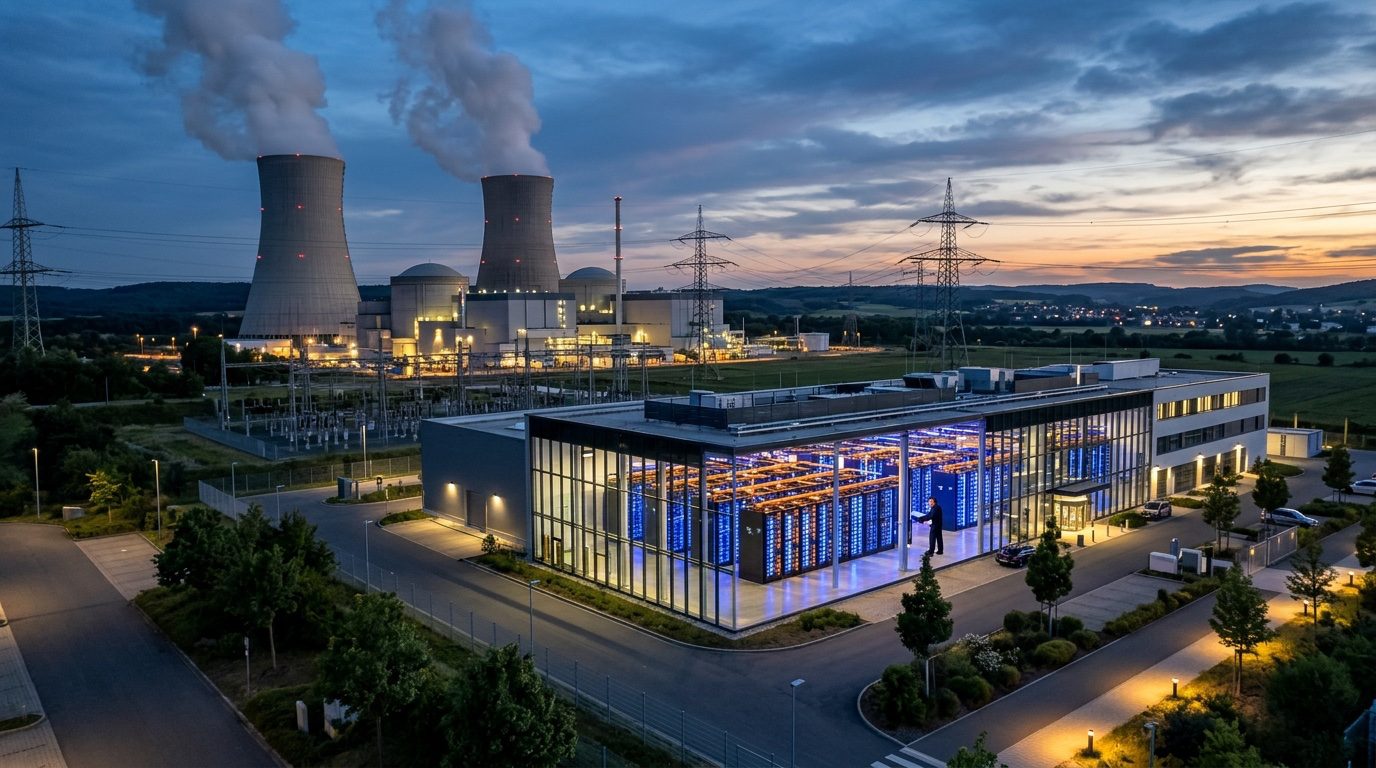
AI data centres need power that never stops. The world is now building more nuclear reactors than at any time in the last 40 years.
A quiet record
In October 2026 the World Nuclear Association counted 79 nuclear reactors under construction around the world (https://asia.nikkei.com/business/energy/nuclear-reactors-under-construction-rise-to-79-globally-on-ai-demand). The last time the number was this high was in 1986, when 91 were being built. Another 122 are planned, and more than 300 are being considered. Today 443 reactors are working.
Why it stopped
In 1986 a serious accident at a nuclear plant scared the whole world, and construction slowed almost everywhere. A second big accident in 2011 added to the fear. For decades nuclear power was seen as something to phase out, and some countries banned new reactors altogether.
Why it is back
Two things changed. Energy became more expensive and less reliable because of conflicts. And artificial intelligence turned out to be very hungry. Every question you ask a chatbot is processed in a data centre — a building full of computers that run day and night and need constant cooling. Data centres need electricity that never stops, whatever the weather. Sun and wind can't promise that on their own. A reactor can run for months without a break and produces almost no carbon dioxide.
How a reactor makes electricity
Inside the reactor, uranium atoms split. Each split releases heat and tiny particles that split neighbouring atoms — a chain reaction. Operators keep it at a steady level with control rods that soak up some of those particles. The heat boils water, the steam spins a turbine, and the turbine spins a generator. It is the same idea as a coal plant, only the fire is replaced by splitting atoms. One uranium fuel pellet the size of a fingertip gives about as much energy as a tonne of coal.
Big and small reactors
Most reactors being built today are big: about 1.1–1.25 gigawatts each, enough to power a large city. Together, everything under construction adds up to about 79 gigawatts. But a big reactor takes 10 to 15 years from the start of construction to the first electricity, and AI companies don't want to wait that long.
That is why so much hope rests on small modular reactors. The idea: instead of building a giant plant on site, make compact reactors in a factory, bring them in ready-made and put several side by side. In theory such a reactor can be ready in about five years.
What is still unsolved
Around 70 different small reactor designs exist, but there is still no common way to check their safety and license them. Experts warn that in the race for speed, safety sometimes takes second place. For now, small reactors make up only a small part of what is being built.
Fact and forecast
Fact: 79 reactors are under construction, the most in 40 years. Forecast: if the plans come true, more than 600 reactors could be working by around 2040. Getting from a plan to a real construction site takes money, licences and factories — and not every plan makes it.